
I went looking for this research because I needed it. This is where I hand it over.
Mastery is not a finish line. It is the lifelong pursuit of greater capability in something that matters, built through sustained practice, honest feedback, and adaptation. I read the research on how that works and write about what it supports and where it stops. What you build from it is yours to assemble.
Written for anyone pursuing something that matters
A craft, a career, a licence, a recovery, a child. The site is for anyone who has decided to get good at something and needs the pursuit to survive contact with a real life.
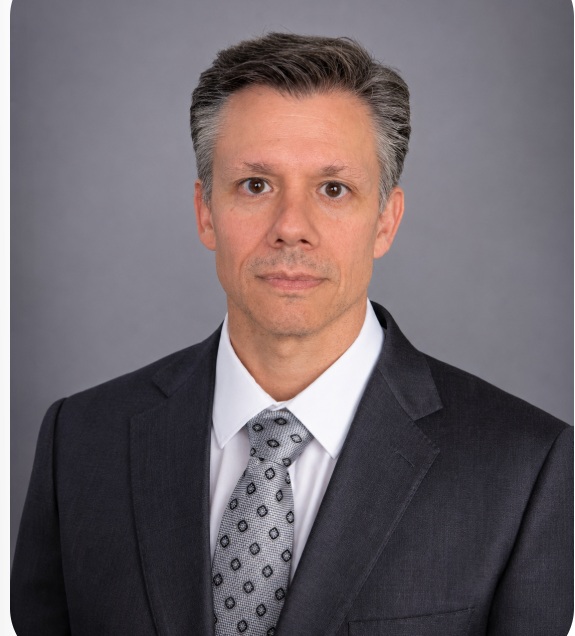
T-Michael Dougherty, Ed.D., MPA
Vice President of Learning Operations, The EMG Solutions Institute. Chair, Alabama Board of Physical Therapy. Founder of Mastery Pathways and host of The Mastery Project Podcast.
30
Years in healthcare
11
Years teaching adults
8
Years directing a PTA program
5
Books in the Mastery Series
What Mastery Pathways offers
The Mastery Project Podcast
Long-form episodes that work through one theme, and three-to-five-minute Briefs that take up a single idea, grounded in one study or one author’s work.
Self-paced courses
Courses in leadership, wellbeing, and professional development. Each is yours for a year and ends with a Certificate of Completion.
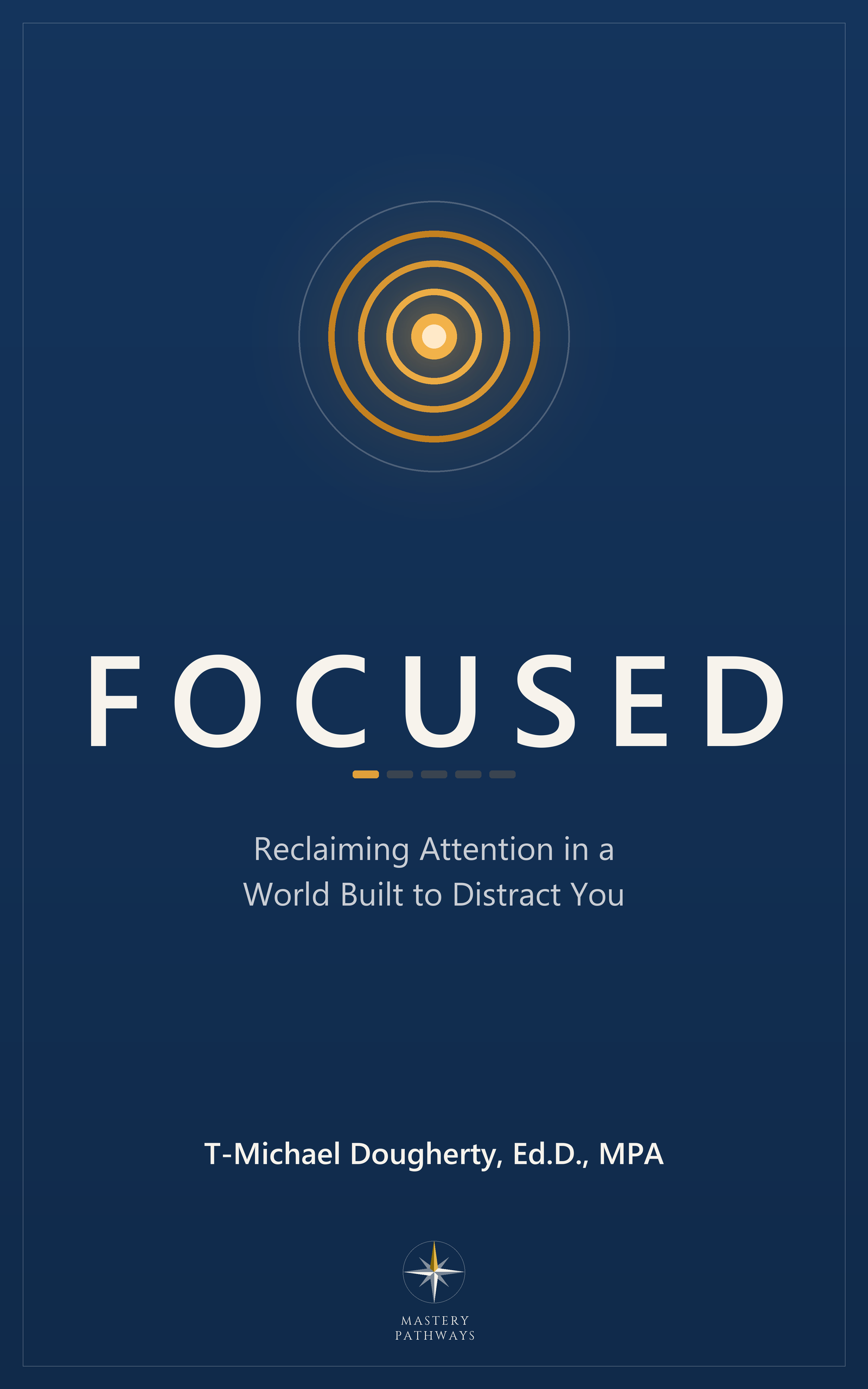
The Mastery Series
Five short books on focus, steadiness, mindset, learning, and leading change, each built on the published research.
Mastery Notes
Short written notes that work through one question at a time: the numbers, the caveats, and where the evidence stops.
The credential is where the harder work starts.
Most professional education ends at the credential. Thirty years in healthcare, in the classroom, and in regulation taught me that earning the credential is the beginning of the work. The harder part is everything after it.
How I got here
I started in physical therapy in 2006, and spent years in clinics and then in state healthcare administration. In 2018 I built a Physical Therapist Assistant program from nothing at a community college in rural Alabama, and taught in it until 2026.
None of that is why this site exists. It matters here for one reason: it put me in front of adult learners for eleven years, and what I saw there is what sent me to the research.
What I noticed, and what I built
The students who struggled were rarely the ones who could not handle the material. They understood the content. Three things came up again and again, and nothing in the curriculum covered any of them.
Holding attention
They could follow the material. Staying with it past the first difficult stretch was another matter entirely.
Absorbing a setback
A single disappointing exam result ended the attempt for a striking number of them, even when the material was within their reach.
Taking feedback
Objective, specific criticism during a practical exam met real resistance — the same feedback a performance review would deliver later.
So I built what I could: mindset and study-skills surveys, academic performance dashboards, early-alert indicators, and a predictive model for licensure readiness. The point was to see trouble while there was still time to act on it. Then I went looking for the research on attention, habit, motivation, and recovery, and that reading turned into the work on this site.
What I found
My doctoral research asked a narrow question with wide application: what makes faculty actually adopt a new instructional technology? I studied microlearning adoption across Alabama’s community colleges using the Technology Acceptance Model.
The finding
Transactional leadership — clear structure, explicit expectations, accountability — was the only significant predictor of adoption across all three constructs the model measures. The inspirational style people say they prefer predicted none of them.
The same pattern turns up in the research on individuals. What predicts whether someone keeps going is rarely how inspired they felt at the start. It is far more often what they put in place around the attempt, and that is most of what I write about here.
Earlier work, co-authored in the International Journal of Healthcare Management, examined how Baldrige-winning hospitals and health systems manage innovation. It was the same question in a different setting.
Work with me
Research, speaking, and learning systems for organizations.
What I’m building at The EMG Solutions Institute
At The EMG Solutions Institute I lead learning operations. The work is designing and building the Institute’s education products: board-exam preparation for clinicians, continuing-education courses, and the learning platforms and analytics underneath them. The same team and tools are available to other organizations, and to individual learners, through the Institute.
Courses and training libraries for organizations
Course development for your team, or a customized training library your staff will use, built and hosted for you.
Learning applications and modules
Interactive modules, exam-preparation tools, and learning apps built for one specific need.
Learners and coaching
Support for individual learners preparing for a board exam or a new role, and coaching that helps you build an approach that fits your own life and work.
Organizational and learner engagements run through The EMG Solutions Institute. Research collaboration, speaking, and publishing enquiries come to me directly. Either way, start here.
Credentials and service
Education, service, and publications, for anyone who needs the formal record.
Publications and research
Dougherty, T.M. (2025). The influence of leadership on faculty attitudes toward microlearning adoption in Alabama’s community colleges: A quantitative analysis using the Technology Acceptance Model [Doctoral dissertation, University of the Cumberlands].
Duarte, N.T., Goodson, J.R., & Dougherty, T.M. (2014). Managing innovation in hospitals and health systems: Lessons from the Malcolm Baldrige National Quality Award winners. International Journal of Healthcare Management, 7(1), 21–34.
Education
Service
I don’t hand anyone a finished system to copy. The research doesn’t support one-size answers, and I wouldn’t trust one that claimed to. What I can give you is the evidence, the tools, and the structure to build an approach that fits your own goals, responsibilities, and circumstances.